

The Case for Creativity in a World That Forgot It
If somethings missing, It’s not gone, it just needs to be renewed.


You’ve probably felt it before you could name it. The meetings that produce action items but not momentum. The roadmap that’s full but somehow doesn’t feel like it’s going anywhere. The sense that the team is working hard and moving fast, but in a direction that was set a long time ago by decisions no one remembers making.
This isn’t a motivation problem. It isn’t a talent problem. Most organizations in this position are filled with capable people who care deeply about the work. What’s happened is something more structural, and in some ways more insidious.
Over time, businesses get very good at optimizing. They trade wonder and experimentation for predictable and repeatable processes. The result, if you let it run long enough, is an organization that has become very efficient at solving the wrong problems.
How yesterday’s logic becomes today’s constraint
Every decision a company makes narrows the field slightly. That’s not a flaw; that’s how organizations function. You can’t explore every direction simultaneously. You choose, you commit, you build capability around that choice.
But decisions accumulate. What once felt like a strategic bet gradually becomes an assumption. The assumption becomes a process. The process becomes invisible. And at some point the organization stops asking whether its approach still makes sense, because the approach has been so thoroughly absorbed into how work gets done that no one thinks of it as an approach anymore. And then the market, industry and technology changes.
Work stays busy. Direction doesn’t shift.
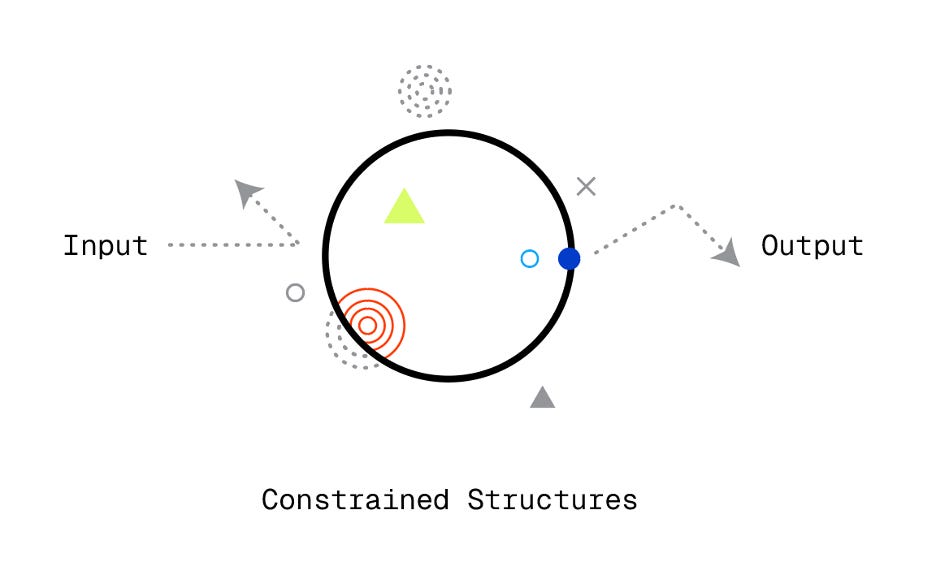
We’ve seen this play out the same way across companies at almost every stage. Someone has an idea, often the person closest to the customer. It gets elevated. And almost immediately it becomes a project: engineers assigned, timelines set, resources allocated. Nobody stopped to ask whether it was worth building. The loudest voice in the room set the direction.
Startups have the same problem, different source. The loudest voices are investors and advisors, and they come with execution expectations already set. Do you have a dev on staff? Have you built the app? How many users do you have? Not bad questions. Just ones that arrive before the more important ones about market and real value.
In both cases the same phase got cut. The space between “here’s an idea” and “we built it.” Not because anyone decided it wasn’t valuable. Because it looked like delay.
What creativity actually is
Most people think of creativity as inspiration: the flash of an idea, the brilliant reframe, an ability, or the unexpected solution. And those things exist. But that framing makes creativity sound like weather, something that happens to you when conditions are right, rather than something you can work with deliberately.
We see it differently.
Creativity is a force. And like any force, it behaves according to conditions. Some environments amplify it. Others suppress it. Some structures give it direction. Others diffuse it before it can build into anything real.
Here’s what surprised us when we first started articulating it: constraints don’t kill creativity, they concentrate it. Pressure creates energy. The market pressures and tight timelines that feel like obstacles are often exactly what generate momentum, if you know how to work with them.
The question isn’t whether constraints exist. It’s whether they’re working for you or against you.
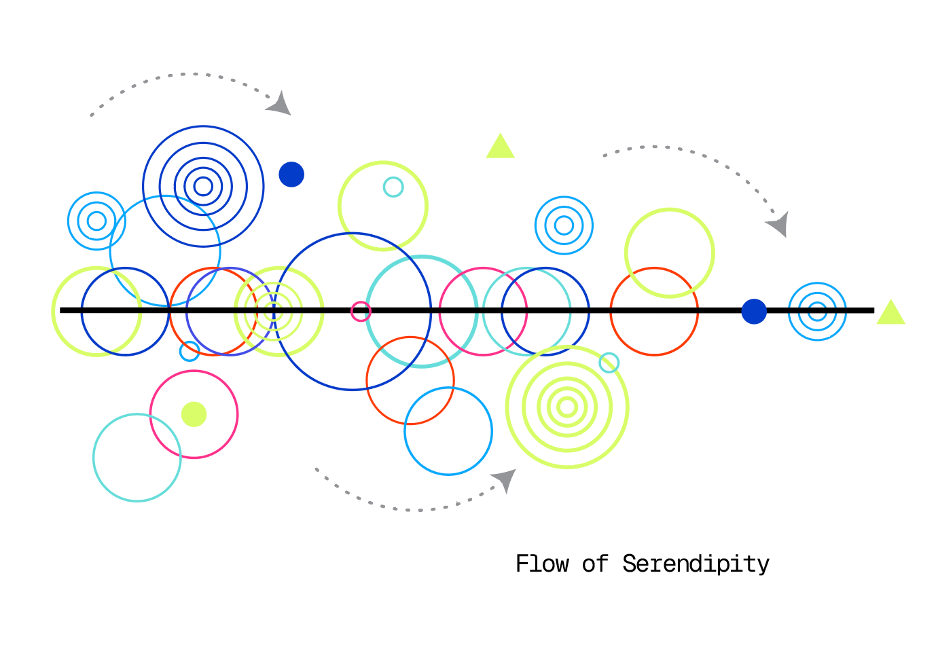
What most organizations are missing isn't more ideas. It's the space between structure and serendipity. The structure is already there. What gets compressed is the serendipity: the room to explore before committing, to question the problem before solving it, to let a slightly unexpected answer surface before the process closes around a predetermined one.
Why this is recoverable
After 25 years of working inside these situations, across founders building something new, privately held companies navigating growth, and corporate teams trying to create something genuinely different inside large systems, we’ve come to believe something that sounds simple but has real consequences.
Creativity doesn’t leave organizations. It gets displaced. And displacement, unlike absence, can be addressed.
The path back rarely starts with a strategy session. It starts with a great question and the enthusiasm of making something: a rough model, a prototype, a reframed version of the problem put in front of the people who need to decide. The goal is to get people reacting instead of just deliberating.
That’s where the stuck decisions tend to surface. The instinct at that moment is to constrain further, to scale, build more, double down. But more constraint in the wrong direction just creates faster drift. The question worth asking is what’s missing, not what to build next.
What ‘this’ is
This is where we write about the work. Not theory, but observations from inside real situations, from the moments where something actually changed.
We believe creativity is renewable. We believe constraints are useful. We believe the space between structure and serendipity is where the most interesting decisions get made. We believe that just like a painter layers strokes to make a painting, businesses can layer learnings from framing and doing. That’s the worldview behind everything we publish and do.
If you’re a founder trying to build something worth building, a leader who can feel the gap between how things are running and how they could be, or someone who just thinks deeply about how organizations move, this is for you.
We’re glad you found it.
— Physics of Creativity
 | A guest post by
|
 | A guest post by
|